Managed WordPress hosting is often marketed as the “premium” option for WordPress websites — but many beginners and business owners aren’t sure what it actually includes or whether it’s worth the extra cost.
From a developer’s perspective, the difference between managed and traditional hosting environments can dramatically impact performance, security, and long-term maintenance.
Here’s what managed WordPress hosting really means.
What Is Managed WordPress Hosting?
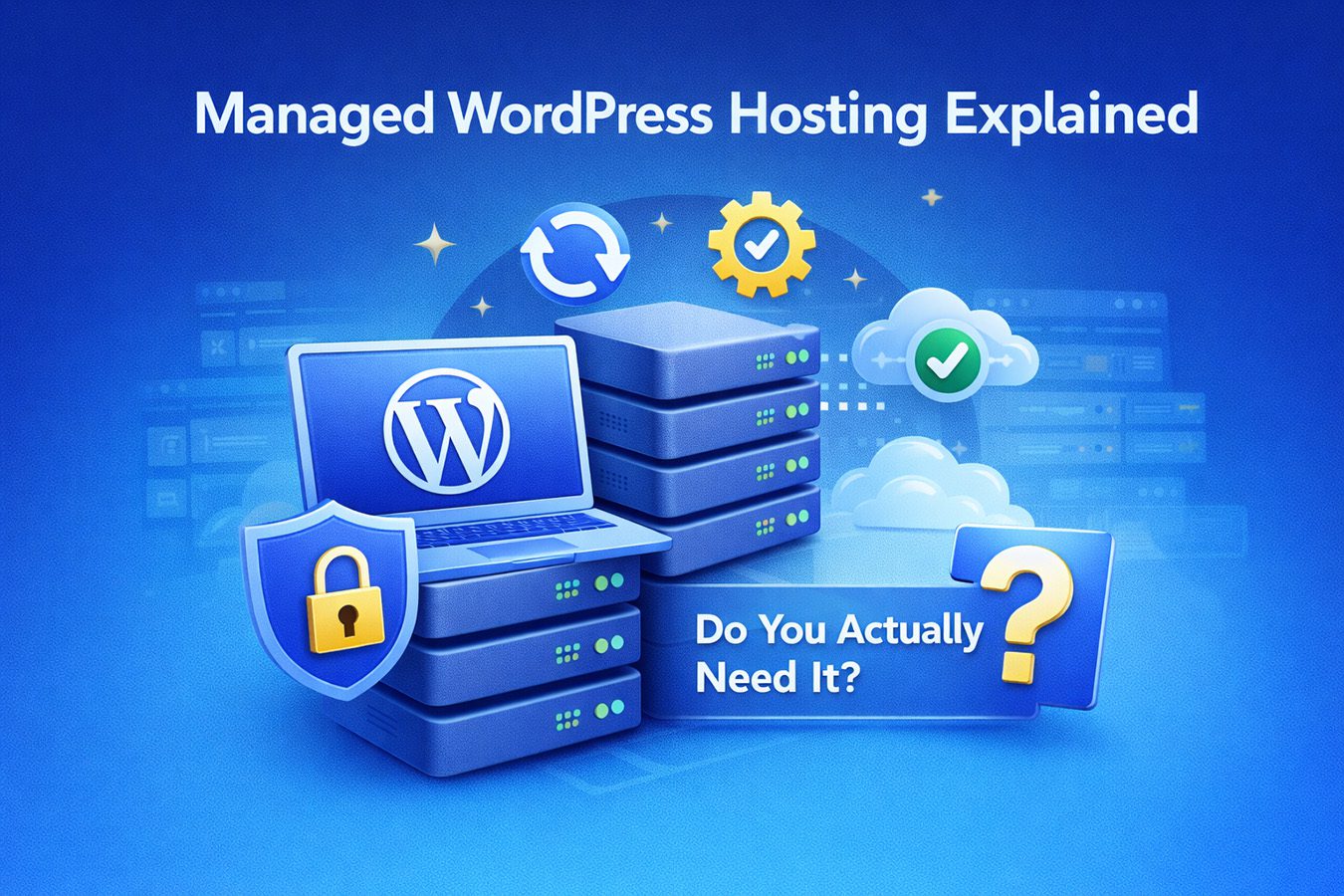
Managed WordPress hosting is a hosting environment specifically optimized for WordPress websites.
Instead of managing server configuration yourself, the hosting provider handles:
- updates.
- backups.
- performance optimization.
- security monitoring.
The goal is to remove technical overhead so website owners can focus on content or business growth.
What Managed Hosting Actually Does Differently
Automatic Updates
Core WordPress updates happen automatically.
Security risks decrease significantly.
Built-In Performance Optimization
Many managed hosts include:
- advanced caching.
- CDN integration.
- optimized PHP configurations.
These improvements often outperform beginner setups.
Daily Backups
Backups are automatic.
For ecommerce sites, this can prevent catastrophic data loss.
Stores especially benefit from these safeguards.
(You can learn more about ecommerce-focused hosting in our Best WooCommerce Hosting guide.)
Managed Hosting vs Shared Hosting
Shared hosting works well for small projects.
However:
- slower performance under traffic.
- limited resources.
- manual troubleshooting.
Managed hosting removes much of this complexity.
For beginners starting serious projects, many developers recommend skipping shared hosting entirely.
(If you’re just starting out, see our Best Hosting for Beginners guide.)
Who Should Use Managed Hosting?
Managed hosting makes sense for:
- ecommerce stores.
- business websites.
- agencies managing clients.
- high traffic blogs.
If downtime directly affects revenue, managed hosting becomes extremely valuable.
Best Managed WordPress Hosting Providers
Nexcess
Strong WooCommerce performance and autoscaling features make Nexcess particularly reliable for ecommerce growth.
WP Engine
WP Engine offers one of the most refined developer workflows available.
Staging environments and performance tooling stand out.
You can also read our full Nexcess vs WP Engine comparison for a deeper breakdown.
Is Managed WordPress Hosting Worth It?
For hobby websites, shared hosting can work.
For growing businesses or ecommerce stores, managed hosting often saves time, stress, and troubleshooting costs.
Many developers ultimately choose managed environments because reliability matters more than saving a few dollars monthly.
Final Verdict
Managed WordPress hosting isn’t necessary for every website.
But if performance, security, or scalability matter, it’s often the easiest long-term decision.