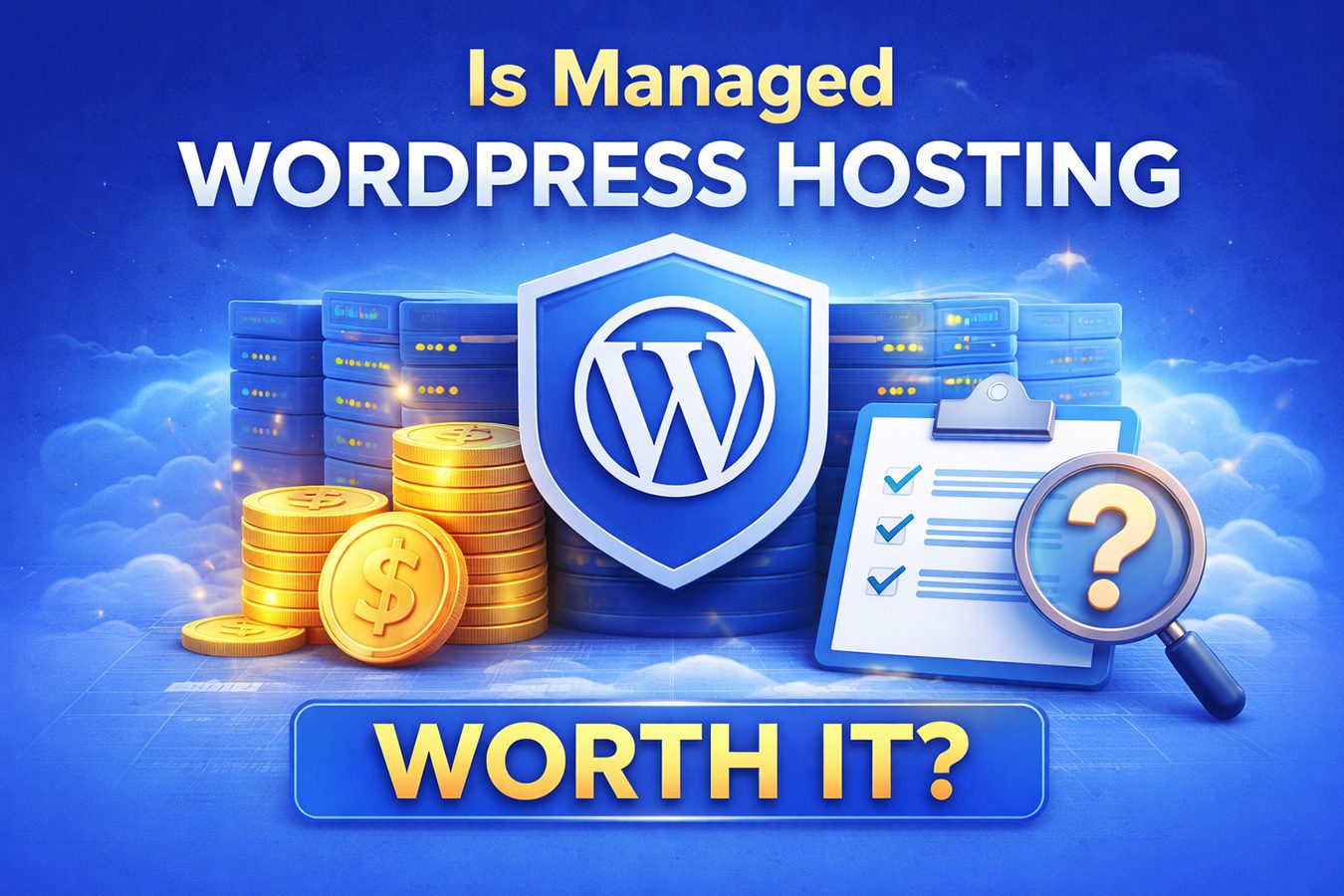
Managed WordPress hosting is often marketed as the “premium” solution for WordPress websites.
But is it actually worth paying more?
As a developer who has worked with shared hosting, VPS environments, and premium managed platforms, the answer depends largely on what your website is responsible for.
If your site is a hobby project, the answer is very different than if it processes payments or generates business revenue.
This guide explains when managed WordPress hosting is worth it — and when it isn’t.
What Is Managed WordPress Hosting (In Practical Terms)?
Managed WordPress hosting means the provider handles much of the technical work required to maintain a WordPress website.
This typically includes:
- WordPress core updates
- performance optimization
- server-level caching
- automated backups
- malware monitoring
Instead of configuring servers manually, the platform is optimized specifically for WordPress performance and stability.
If you want a deeper explanation of how managed environments differ technically, see our full guide:
Managed WordPress Hosting Explained
When Managed WordPress Hosting Is Worth It
Ecommerce Websites
WooCommerce websites behave very differently from blogs.
They rely heavily on:
- logged-in users,
- dynamic cart sessions,
- payment processing,
- database queries.
Traffic spikes during promotions or product launches can overwhelm shared hosting environments.
If checkout slows down or fails, conversions drop immediately.
For ecommerce stores expecting growth or seasonal traffic, managed hosting environments designed for scalability often make sense.
Compare Nexcess managed hosting plans →
You can also learn more about ecommerce hosting requirements in our guide:
Business Websites Generating Revenue
If your website:
- generates leads,
- schedules appointments,
- or supports client acquisition,
downtime directly affects revenue.
Managed hosting reduces risks related to plugin conflicts, failed updates, and performance bottlenecks.
For business-focused managed hosting environments with strong workflow tooling, many developers consider premium platforms like WP Engine.
View WP Engine managed WordPress hosting →
Agencies Managing Client Sites
Agencies benefit heavily from:
- staging environments,
- automatic backups,
- deployment workflows.
Updating client sites without staging can introduce risk.
Managed hosting reduces that risk significantly.
Many agencies prioritize reliability and workflow efficiency over saving a small amount monthly.
When Managed Hosting May NOT Be Worth It
Small Personal Blogs
If your website has:
- minimal traffic,
- few plugins,
- no ecommerce functionality,
shared hosting can work perfectly well.
Upgrading too early often isn’t necessary.
If you’re just starting your first website, see:
Technical Users Comfortable With VPS
Some developers prefer VPS hosting environments because they offer:
- root server access,
- custom configuration,
- specialized software stacks.
However, VPS hosting also requires active maintenance.
If you enjoy managing servers, VPS hosting can be powerful.
If not, managed hosting removes that responsibility.
See the full breakdown here:
Shared vs VPS vs Managed Hosting
The Hidden Cost Most People Ignore
Many people compare hosting based only on monthly pricing.
They don’t consider:
- troubleshooting time,
- emergency migrations,
- malware cleanup,
- plugin conflicts after updates.
From experience, businesses that grow beyond hobby websites often migrate to managed hosting eventually.
The real question becomes:
“How long before I upgrade anyway?”
Performance Differences in Real Use
Upgrading from shared hosting typically results in:
- faster admin dashboards,
- more consistent page speed,
- improved checkout reliability,
- less manual caching configuration.
These improvements may feel subtle at first.
They become extremely noticeable as traffic increases.
Real-World Recommendation
If your website is:
- a hobby blog → shared hosting is usually fine,
- a growing content site → consider upgrading soon,
- an ecommerce store → managed hosting is often worth it,
- an agency or business website → managed hosting reduces operational risk.
If you’re comparing premium managed providers directly, you may find our full comparison helpful:
Nexcess vs WP Engine Comparison
You can also compare leading managed platforms directly:
Compare Nexcess hosting options →
View WP Engine pricing and plans →
Quick Comparison
| Scenario | Shared Hosting | Managed Hosting |
|---|---|---|
| Hobby Website | Good | Overkill |
| Beginner Blog | Good | Optional |
| Ecommerce Store | Risky | Strong Choice |
| Business Website | Limited | Recommended |
| Agency Sites | Difficult | Ideal |
Frequently Asked Questions
Is managed WordPress hosting faster?
Usually yes — especially during traffic spikes or heavy plugin usage.
Managed environments are optimized specifically for WordPress workloads.
Do beginners need managed hosting?
Not always.
Many beginners start with simpler hosting and upgrade later as traffic grows.
Does managed hosting eliminate all problems?
No hosting platform eliminates every issue.
However, managed environments significantly reduce technical maintenance responsibilities.
Final Verdict
Managed WordPress hosting is worth it when:
- your website generates revenue,
- performance stability matters,
- downtime affects conversions,
- or you want to reduce technical maintenance.
It’s not always necessary at the beginning.
But for growing businesses and ecommerce websites, it often becomes the easiest long-term decision.